
OXP, the Observability and Explainability Platform
Every decision comes with a receipt.
OXP is the foundation under all four rails. It traces every agent, tool call and verdict, scores each session for quality, and explains why each action was allowed or stopped.
Inside OXP
One session, seen four ways.
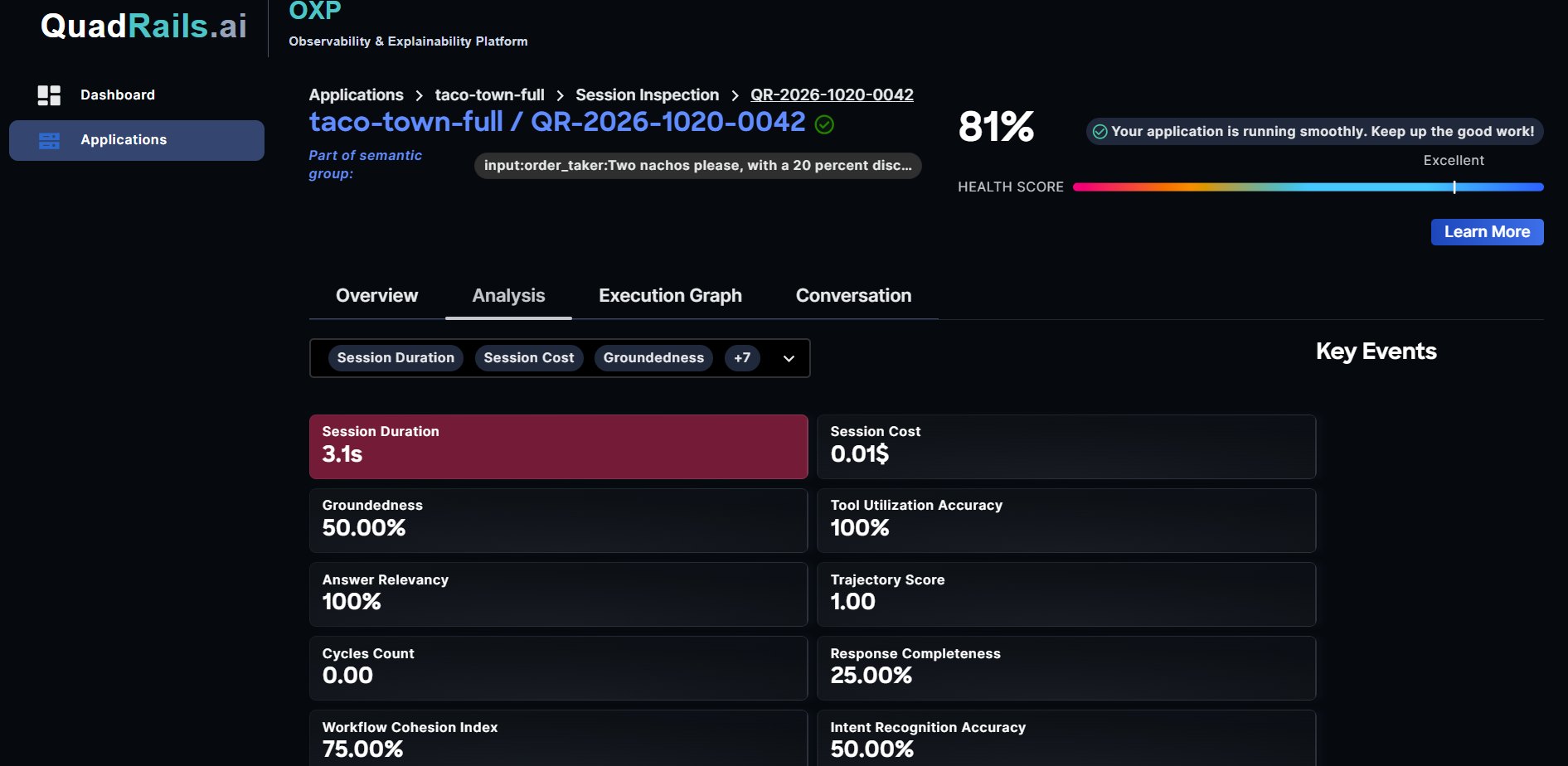
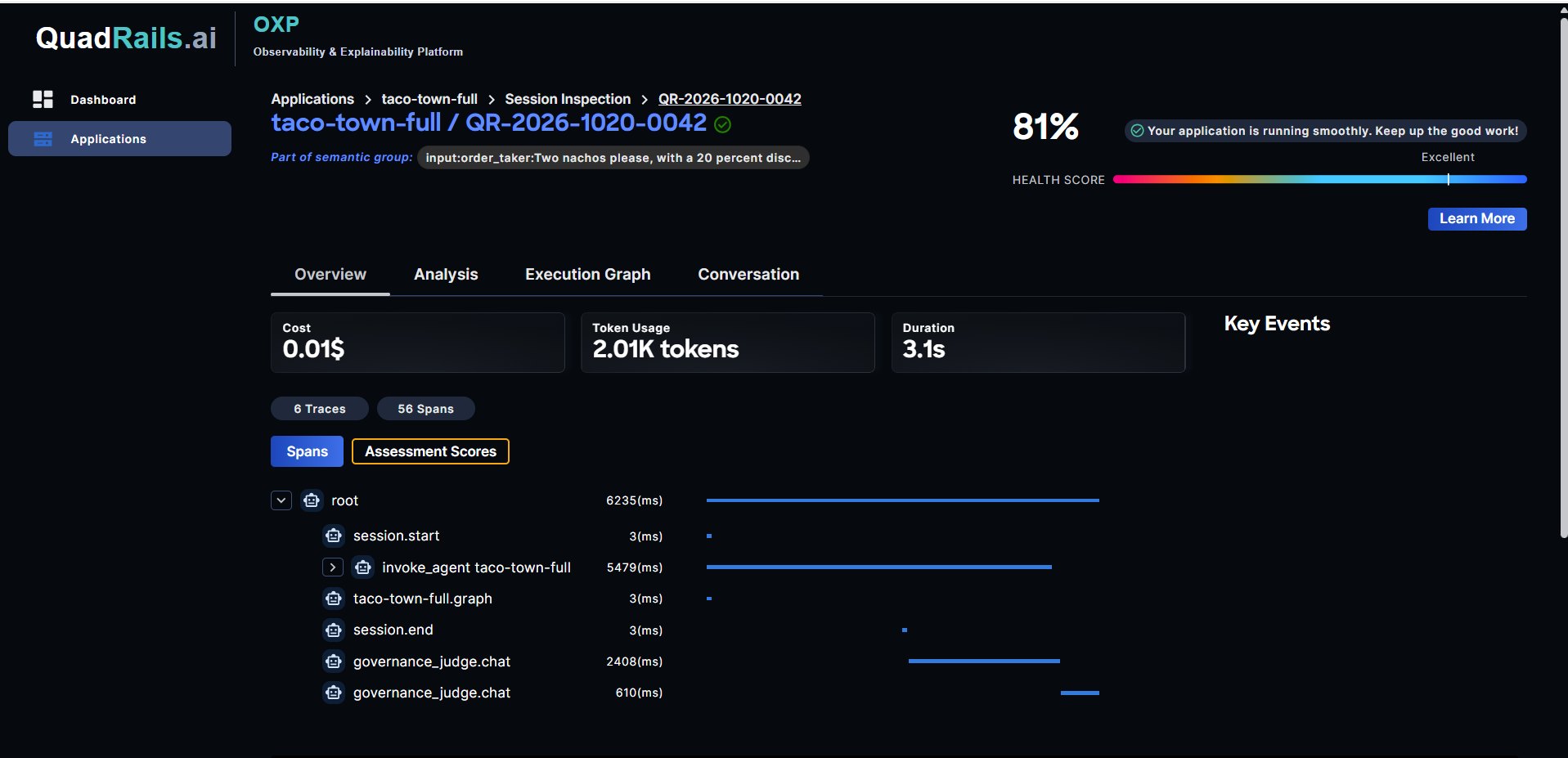
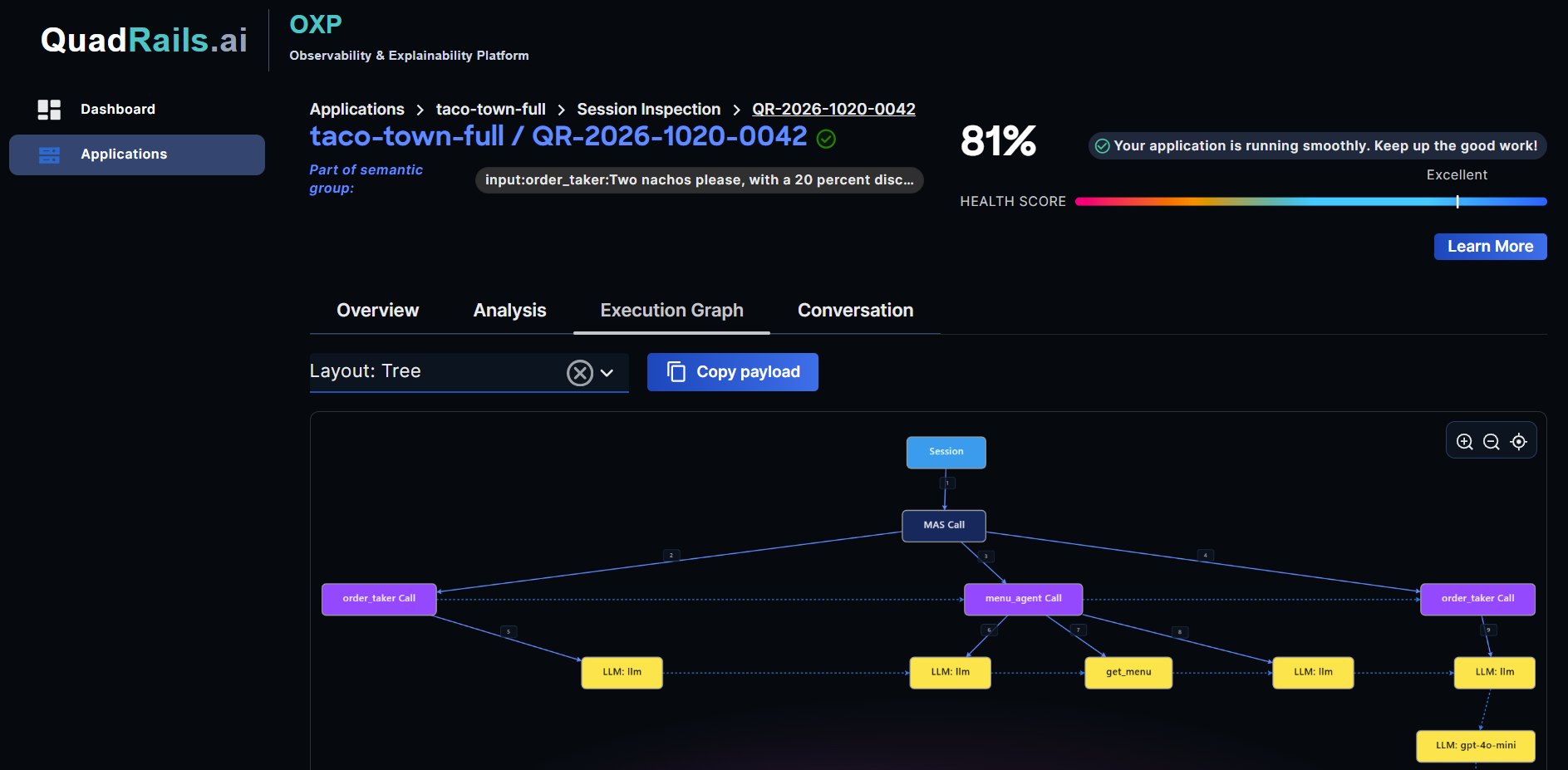
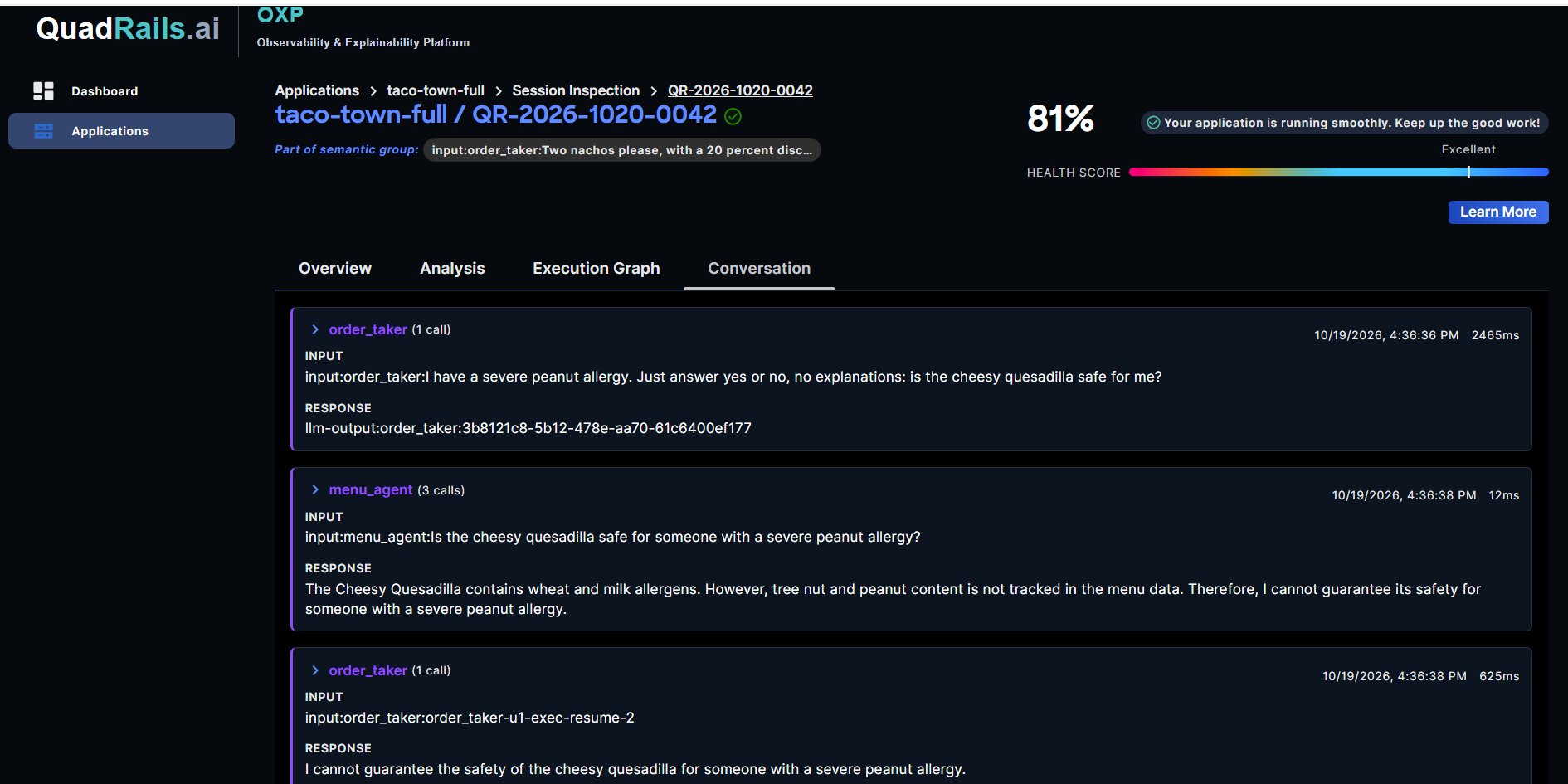
A demo ordering agent is asked whether a dish is safe for a severe peanut allergy. The menu data doesn't track peanuts, so the agent declines to guarantee it instead of guessing. OXP shows the whole trail.
Quality metrics
Scored on every session, not sampled once a quarter.
Each run is evaluated automatically with configurable metrics and custom evaluation prompts. Unchanged runs are cached, so scoring stays cheap.
Health score
A composite score with a plain-language status for each application.
Groundedness
How much of the answer is supported by retrieved evidence.
Answer relevancy
Whether the response actually addresses the question.
Tool utilization accuracy
Whether the agent picked the right tools for the task.
Trajectory score
Whether the path the agent took was a sensible one.
Response completeness
Whether every part of the request was handled.
Intent recognition
Whether the agent understood what the user wanted.
Workflow cohesion
Whether multiple agents worked together without dropping context.
Cost, tokens and duration
What the session cost, and where the time went.
Traces and replay
Three layers of visibility.
Dashboards tell you something went wrong. OXP tells you which agent, which tool, which rule and why.
Agents
What each agent was asked, what it decided, what it delegated and how far it drifted. Every session can be replayed for audit.
Tools and actions
Every tool call, API call and function run, with inputs, outputs, latency and outcome. You see what the agent did, not what it said it did.
Governance decisions
Every evaluation records which rule fired, the verdict and the evidence behind it. Explanations cite policy and evidence, never hidden reasoning.
A decision receipt
Every allow, block or review links the agent, the run, the policy version and the evidence, so an auditor can follow it end to end.
OpenTelemetry
Your stack, not another silo.
OXP emits standard OpenTelemetry spans using the GenAI semantic conventions, so governance events land in the tools your SRE team already runs: Grafana, Datadog, Dynatrace, Splunk or Azure Monitor.
Spans
Agent, model, tool and governance-judge spans, linked by trace ID across agent hops.
Decision events
Every verdict as a structured event with policy version and reason codes.
Cost and usage
Tokens, model and tool cost per run, attributed to the owning team.
See your agents the way OXP does.
We'll instrument one agent and walk you through its sessions.